
Reviewed · SINTRA NATIONAL PALACE & HISTORIC VILLAGE
Sintra: National Palace and Gardens Skip-the-Line Ticket
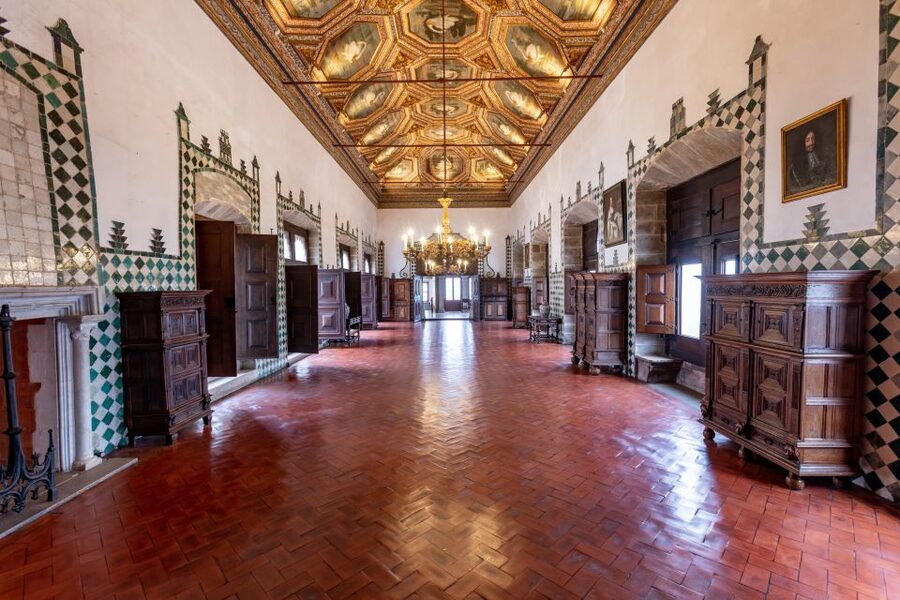
Sintra’s palace is a time machine. This skip-the-line ticket lets you step into the National Palace of Sintra, where Moorish fortress beginnings and Portuguese royal expansions overlap across nearly 1,000 years. I especially liked the Manueline and Mudejar courtyards with their glazed-tile geometry and water features, and I also found the new audiovisual route (with 14 historical figures) gives the rooms a much more human feel. One heads-up: depending on the day, some areas may be closed, and you’ll want to protect your time because last admission is 5:30 PM.
You can tour at your own pace, and that matters in Sintra, where crowd energy can drain you fast. I like that the ticket includes a free audio guide app in Portuguese, English, Spanish, and French, so you’re not stuck waiting for a group. The one drawback I’d flag is simple: getting to the entrance and following the route can be confusing at peak times, and at least one review asked for better on-site direction.
If you’re the type who wants history you can see (and a few “who lived here?” moments), this is a strong value way to do Sintra’s most medieval-feeling royal palace. Guides aren’t included, but people have praised helpful staff by name, including Mr. Padovan and Rui, which tells me support is there when you need it.
In This Review
- Key takeaways before you go
- Entering Sintra’s National Palace without the headache
- A 1,000-year story told through rooms and design
- The courtyards: where the palace really performs
- The new audiovisual route: 14 historical figures with real emotion
- Using the included audio guide app (and why it’s worth it)
- Timing: opening hours, last admission, and the gardens question
- Price and value: is $15 a good deal here?
- Who should book this and who might feel disappointed
- Practical expectations: what the visit feels like on the ground
- Should you book this skip-the-line National Palace ticket?
- FAQ
- What time does the National Palace of Sintra open, and when is the last admission?
- How long should I plan for the visit?
- Is this ticket a guided tour?
- What languages are available for the audio guide?
- Does it really skip the line?
- Where is the meeting point?
- Can I get a refund if plans change?
Key takeaways before you go
- Skip-the-line access saves energy when Sintra is busy.
- Manueline + Mudejar design shows up in the courtyards and interior details.
- A new audiovisual route with 14 historical figures adds context beyond plaques.
- The palace is manageable: many people can do it in about an hour and a bit.
- Plan for walking and stairs. It’s not ideal if mobility is limited.
- Even with fast entry, you still need to time your visit for last admission.
Entering Sintra’s National Palace without the headache
The National Palace of Sintra is the kind of place where the building tells a story you can actually follow. It started as a Moorish castle after the Umayyad conquest of Hispania in the 8th century. Then, in 1147, the first king of Portugal extended the fortress, and later royal additions leaned into Portuguese styles shaped by trade, religion, and local materials.
The ticket’s biggest practical win is that it’s skip-the-line. That sounds like marketing fluff until you’ve tried to visit popular palaces in Sintra. When crowds form, your time becomes hostage to queues. Here, you get inside, then you control the pace with your audio app.
For me, that control is huge because the palace is detailed. You’ll want time to look up at arches, slow down at tilework, and stand in rooms long enough to notice how the decorative language changes from space to space. The skip-the-line part helps you arrive ready to look, not just to survive.
A 1,000-year story told through rooms and design
This palace is a living timeline. You don’t need to be a medieval architecture expert to feel the shifts. As you move through the visitor route, you’re basically watching eras stack on top of each other.
Here’s the pattern I’d expect you to notice:
- Moorish roots: the earliest “fortress logic” is part of the palace’s bones.
- Early Portuguese royal expansions: you see what the Portuguese court added and emphasized after the kingdom formed.
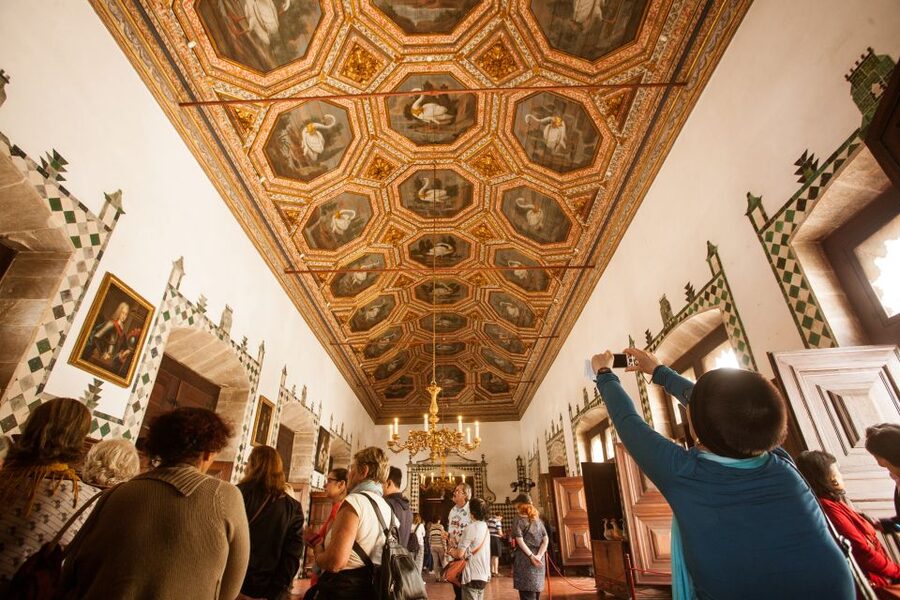
- Later stylistic layers: Manueline and Mudejar influences show up in interior courtyards and ornamental details.
One of the most memorable “this is why I came” moments is the way the palace uses the natural landscape in its layout and later expansions. Even if you only have a short visit, the place tends to reward attention.
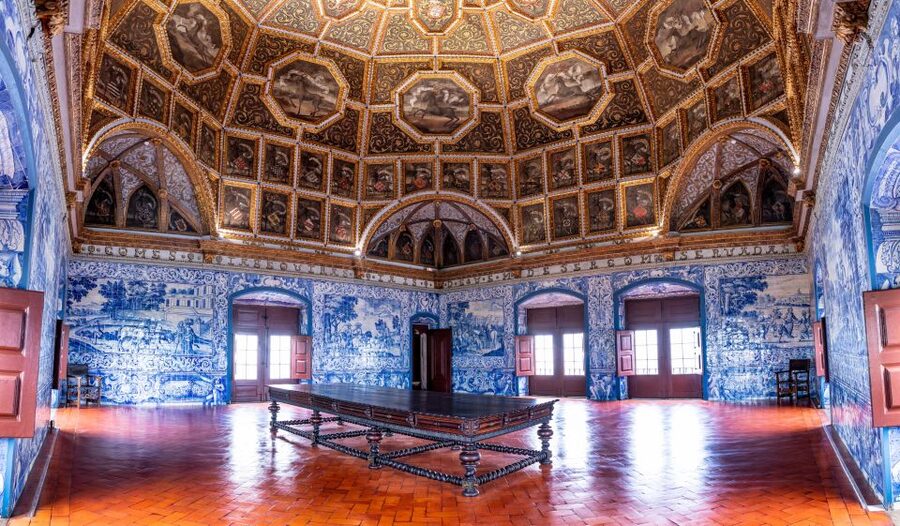
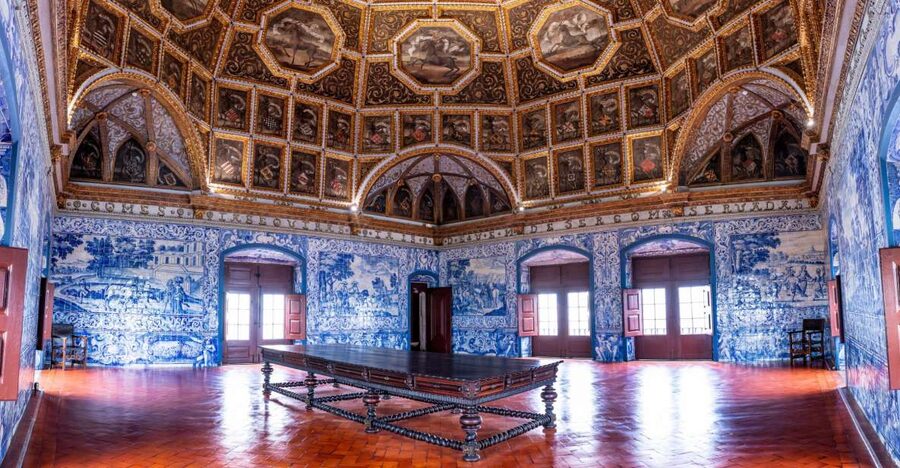
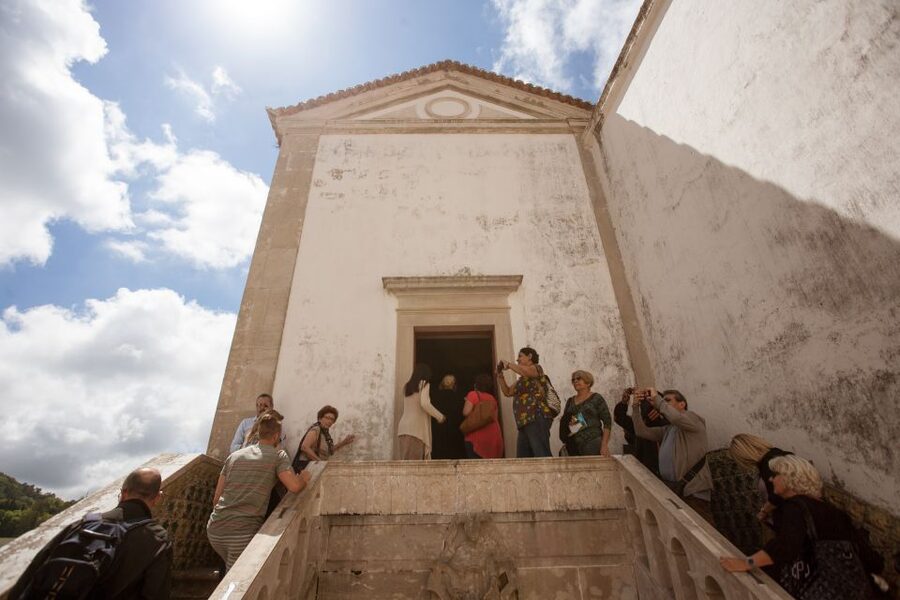
A couple of specific standouts from people who visit often include the Heraldic Room and the Chapel. Those rooms don’t just look impressive; they help explain how royal identity and religious life were staged inside the palace.
The courtyards: where the palace really performs

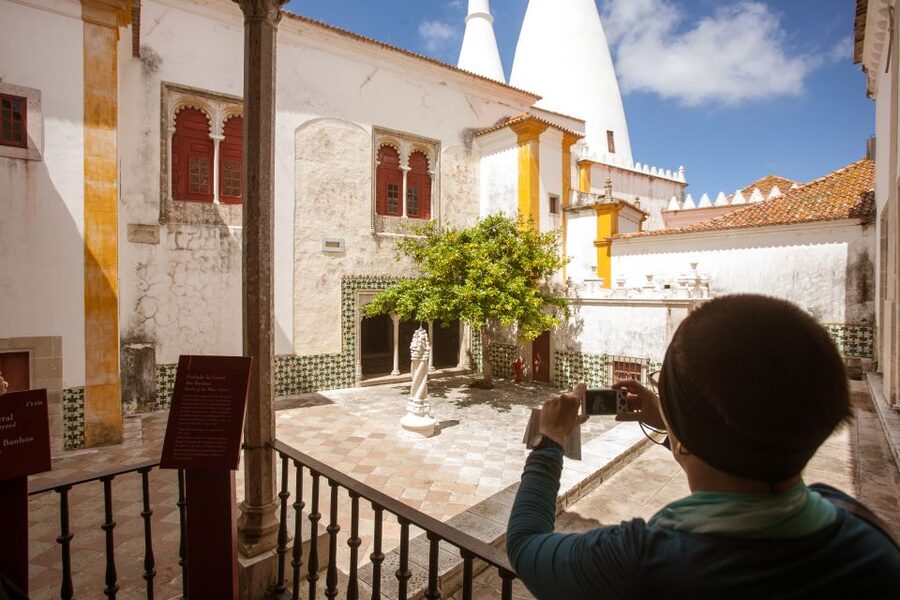
If there’s one reason people get excited about the National Palace, it’s the courtyards. This isn’t a palace that relies only on big showpiece halls. It leans on contrast: light versus shadow, tile versus stone, water versus stillness.
In the courtyards, you’re looking for:
- Glazed tile walls with geometric patterns
- Arches with surmounted shapes (those stacked, decorative arch-top treatments)
- Water features that make the space feel cooler and more alive
This is also where the Manueline and Mudejar style blend becomes easiest to see. Manueline is famously Portuguese, with decorative complexity. Mudejar comes through as a visual language that’s strongly tied to Islamic art and craft traditions. Put them side by side, and the palace stops being just “old” and becomes “intentional.”
If you like photography, this is the section you’ll want to slow down for. The tiles catch light differently throughout the day, and the courtyards give you angles that feel more architectural than touristy.
The new audiovisual route: 14 historical figures with real emotion
One of the nicest upgrades you get with this experience is that the palace tour route includes an innovative audiovisual journey. Instead of treating the rooms like a museum hallway of facts, this version puts 14 “forgotten” historical figures into the walk.
The figures range from cooks to queens, which is clever because it reframes the palace. You aren’t only imagining monarchs. You’re imagining the people who maintained the household, worked in the kitchens, and served daily life. Those stories make the spaces feel inhabited rather than archived.
A big practical plus: the video portraits are available in Portuguese and English, and they’re voiced by renowned Portuguese actors. That means the emotional tone is doing some of the work for you. You’re not stuck reading everything at your own pace.
This audiovisual route complements other tools included with your ticket, like the audio guide app, and it also sits alongside existing interactive elements such as a virtual tour and a treasure hunt (if those are offered during your visit). Translation: you’ll have multiple ways to understand what you’re seeing, which is helpful if you’re visiting with different interests in your group.
Using the included audio guide app (and why it’s worth it)
Your ticket includes a free audio guide via app with Portuguese, English, Spanish, and French. That flexibility matters because Sintra can attract mixed-language groups, and you shouldn’t feel like your visit depends on someone else’s narration.
Here’s how I’d use it:
- Start with the basics when you enter, so you know what each room is meant to represent.
- When you reach a courtyard, pause long enough to sync what you see with what the audio describes.
- If you’re short on time, let the audio guide your “must see” route, then spend extra time where you’re naturally drawn.
Reviews are consistent that the audio guide is helpful for understanding what you’re looking at. People also mention that the palace is very doable in around an hour and a bit if you keep moving. If you’re the type who stops often for photos and details, you can easily stretch longer, but it’s still a manageable site.
Timing: opening hours, last admission, and the gardens question
The National Palace of Sintra runs 9:30 AM to 6:00 PM, with last admission at 5:30 PM. Plan around that. If you arrive late, you might still get inside, but you’ll feel rushed, and the last stretch can cut off the parts you wanted most.
One important lesson that comes up in real visits: people sometimes assume gardens or exterior areas will stay accessible later than expected, then miss out because closing times tighten closer to the end of day. Your safest move is to treat the 5:30 PM last admission as the hard stop. Even if the palace itself feels “quick,” the palace route plus courtyards plus stair navigation can eat up time.
If you want the best experience with the least stress:
- Aim for earlier in the day, or late afternoon on a non-crowded day.
- Don’t overpack your Sintra schedule the same day. This palace works best when you can wander without friction.
Price and value: is $15 a good deal here?

At about $15 per person, this ticket’s value depends on one thing: your day’s crowd level.
When lines are long, skip-the-line can be worth more than you’d think. Time is your currency in Sintra. If you spend 45 minutes queuing elsewhere, you lose the chance to enjoy rooms properly.
You’re also getting:
- Entry ticket to a major monument
- Audio guide in multiple languages
- The audiovisual route with 14 historical figures
One review specifically mentions that pre-purchasing tickets was easy and helped avoid lines, which supports the idea that you’re paying not just for entry, but for smoother entry. Another review notes you might not need fast-track at certain times of year, which tells me timing matters. If you’re visiting in a quieter season and go at a clever hour, you might still have a good experience even without extreme speed. But the skip-the-line option is a low-risk bet on busy days.
So, I’d frame it like this: pay for convenience and context, and keep your expectations realistic about what you can see in one day.
Who should book this and who might feel disappointed
This is best for:
- People who want a self-guided palace visit with strong story support from audio.
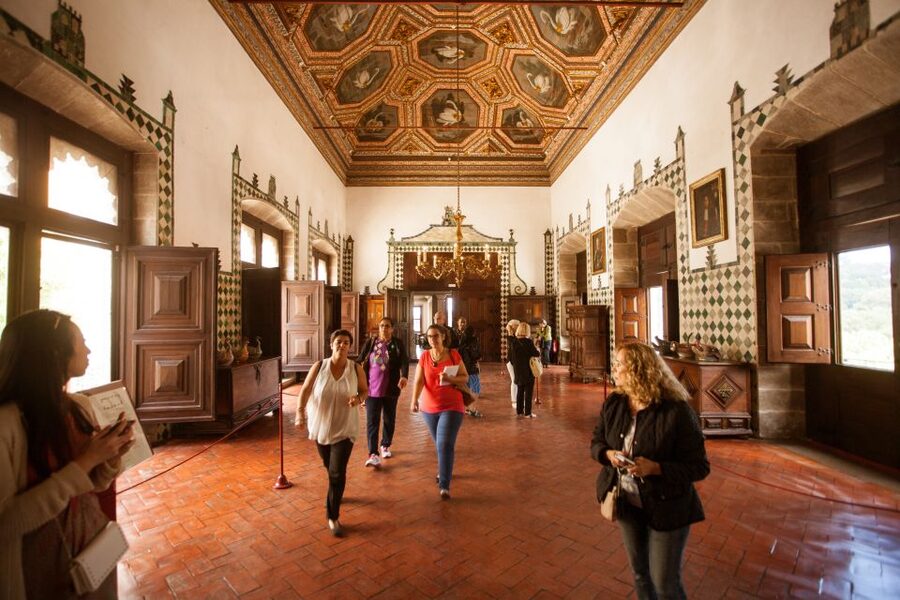
- Anyone who loves Portuguese tiles and architectural details you can study close-up.
- Visitors doing a first Sintra trip and want the palace that feels medieval and royal without needing a full guided tour.
You might feel less thrilled if:
- You’re hoping for a big outdoor garden day. Some visitors describe gardens as underwhelming compared with expectations elsewhere in Sintra.
- You need step-free access. Reviews include comments that it can be very challenging if you have mobility limitations, with limited access and not much handrail support on steps.
If you’re visiting with older family members, or someone who hates stairs, it’s worth thinking through route comfort before you commit. This palace is still doable for many people, but the experience is clearly shaped by walking and climbing.
Practical expectations: what the visit feels like on the ground

A few realistic notes from the experience pattern:
- Expect stairs and ups-and-downs. Even if the palace is compact, movement is vertical.
- The palace isn’t “just one room.” You’ll move between spaces, and your legs will feel it.
- Crowding can be uneven. Some people hit it with no line at all (especially going later), while others report peak times where it feels very busy.
Also, don’t assume signage will instantly solve every direction question. One review said entry was confusing and that more staff guidance would have helped. My advice: if you arrive and feel turned around, ask. The place is historic; your brain wants modern wayfinding. That mismatch is normal.
Should you book this skip-the-line National Palace ticket?
Book it if you want a fast, low-stress way to see one of Sintra’s most important historic monuments, with audio support that helps you understand what you’re looking at. The value is strongest when you’re visiting during heavier crowds, because skip-the-line protects your time to actually enjoy the rooms.
I would not overthink it, but I would plan smart:
- Arrive with enough time for the last admission cutoff.
- Build your day so you’re not sprinting between palaces.
- If gardens/outdoors are your main priority, consider checking whether your day’s timing will let you see what you expect.
If you like architecture, tiles, and a palace that changes style as you walk through it, this is an excellent Sintra “core stop.”
FAQ
What time does the National Palace of Sintra open, and when is the last admission?
It is open from 9:30 AM to 6:00 PM, with last admission at 5:30 PM. Please check the opening hours and last admission time before you go.
How long should I plan for the visit?
Many visitors say they only need about an hour and a bit to see the palace, depending on how much time you spend in rooms and courtyards.
Is this ticket a guided tour?
No. This experience is skip-the-line entry with an included audio guide via app.
What languages are available for the audio guide?
The free audio guide is available in Portuguese, English, Spanish, and French.
Does it really skip the line?
Yes, it includes skip-the-line entry. Review comments suggest it can help you go straight to the entrance, especially at busier times.
Where is the meeting point?
The meeting point may vary depending on the option booked.
Can I get a refund if plans change?
No. The activity is non-refundable.
Sintra National Palace & Historic Village, compared.
 ★ 5.0Magical Sintra Village TourFrom $3901 reviews
 ★ 5.0The Romantic Village – Half-Day Private Guided TourFrom $86413 reviews
 ★ 5.0Sintra Walking Tour: Romantic Village & PalacesFrom $3148 reviews
 ★ 4.9The Romantic Village – Private Half-Day Guided TourFrom $7284 reviews
 ★ 4.9Walking Tour with Palace, Castle, and Old Town VisitFrom $4766 reviews
 ★ 5.0Private: Quinta da Regaleira & Sintra Historic Center Guided TourFrom $8429 reviews
 ★ 3.4National Sintra Palace E-Ticket and Audio GuideFrom $1728 reviews
 ★ 5.0Private Évora Tour – Megaliths, Historical Center and Cork RegionFrom $24016 reviews
Browse the lists this tour appears in