
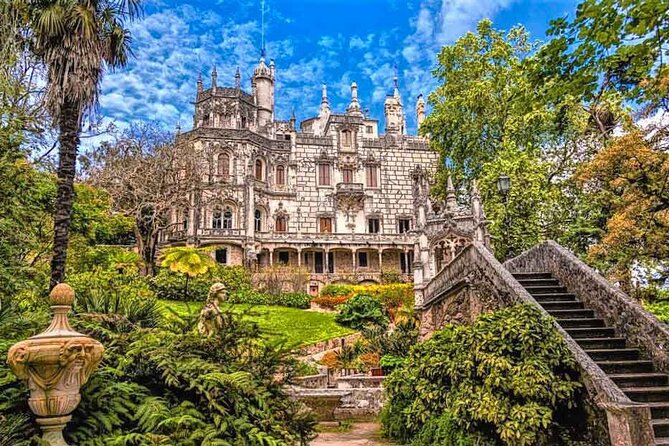
Reviewed · CABO DA ROCA & THE ATLANTIC COAST
Tuk-Tuk Tour in Sintra Palaces in Cabo da Roca
Sintra can feel huge; this tour keeps it bite-size. You ride between key palaces and viewpoints fast, with short photo stops and an English-speaking guide pointing out what matters. I like how it strings together the town, the castle heights, and then the Atlantic edge at Cabo da Roca in one easy outing.
The other big win for me is the human factor: guides like Pedro and Marcos are praised for respectful driving and clear, practical storytelling that blends Portuguese history with nature. The one drawback to plan around is simple: monument entry is not included, so you do a lot of seeing from outside, not long, inside-only palace time.
In This Review
- Key things I’d watch for on this tuk-tuk route
- How the tuk-tuk Sintra palaces route really feels (3 to 4 hours, outside sights)
- Starting in Sintra town: Sabuga Fountain and the National Palace area
- Palácio e Parque Biester and Vale dos Lagos: Romantic architecture plus calm nature
- Castelo dos Mouros: the “big view” stop where the day clicks
- Pena Palace area and the Moorish-Gothic-Romantic blend
- Quinta da Regaleira and Monserrate: mystery, writers’ retreats, and English art influence
- Penedo: the traditional village break before the coast
- Cabo da Roca and Azenhas do Mar: the western edge of continental Europe
- Price and value: what you pay for (and what you don’t)
- Weather, fog, and how to keep your day on track
- Who this tuk-tuk tour suits best (and who should plan differently)
- Should you book this Tuk-Tuk Tour in Sintra Palaces to Cabo da Roca?
- FAQ
- How long is the tuk-tuk tour?
- What is included in the price?
- Is the tour in English?
- Where does the tour start and end?
- What should I expect at Cabo da Roca?
- What happens if weather is bad?
Key things I’d watch for on this tuk-tuk route
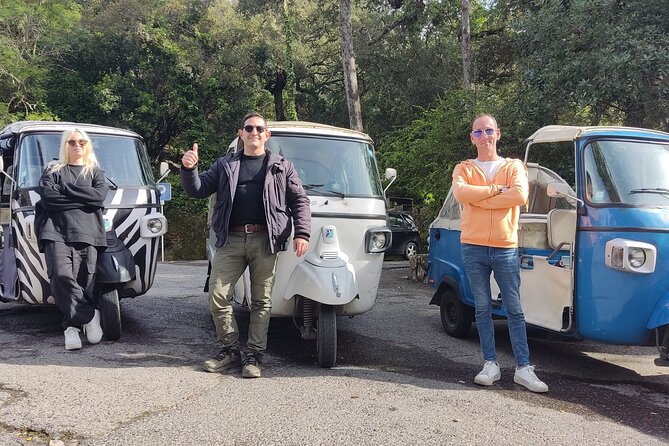
- Short stops, big variety: you hit many famous spots without turning the day into a nonstop walking test.
- Tickets are mostly on you: the drive-by style means you’ll likely decide on a few sites to pay for inside.
- Misty-to-sunny Cabo da Roca: the cape experience changes with the weather, and that is part of its drama.
- Garden lovers will be happy: Palácio e Parque Biester, Quinta da Regaleira, and Monserrate are built for mood and views.
- Views from above, not just street level: Castelo dos Mouros gives you the big picture across the countryside toward the Atlantic.
- Guide personality matters: Pedro and Marcos get highlighted for making the day relaxed rather than rushed.
How the tuk-tuk Sintra palaces route really feels (3 to 4 hours, outside sights)
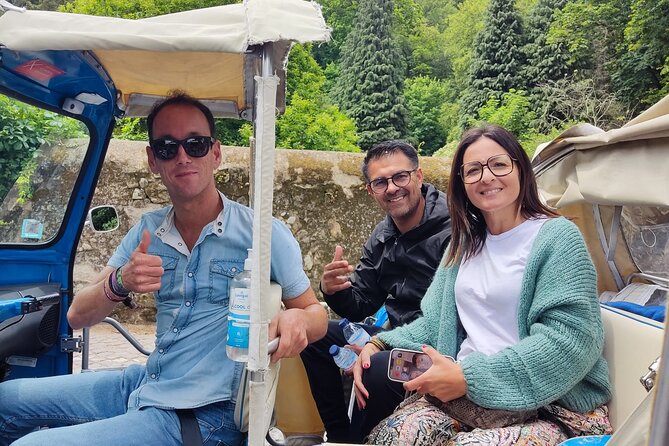
This tour is built for people who want to see a lot of Sintra without needing a car or a full day of crisscrossing on foot. You’re on a tuk-tuk-style vehicle, so you stay mobile even when streets get tight or viewpoints are spread out.
Timing is the heart of the experience. The stops are brief, roughly 10 minutes each at most locations, with the overall tour clocking in at about 3 to 4 hours. That means you should treat each stop like a chapter opener: you get the setting, key context, and a few great angles for photos, then you move on before the day gets heavy.
Two practical notes help you enjoy it more. First, this is an outside-of-attractions style. You’ll see palaces, parks, towers, and vistas from vantage points, not in-depth museum-style tours. Second, the tour includes bottled water, which sounds small until you’re doing coast-and-palace in one go.
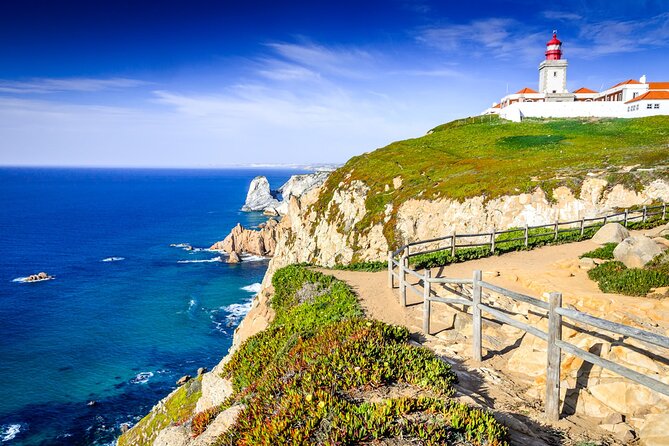
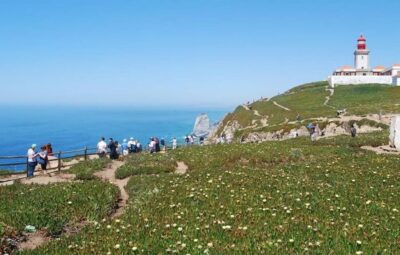
Out to the cliffs at Cabo da Roca, where Europe runs out of land.
- Lisbon: Sintra, Pena Palace, Cabo da Roca, & Cascais Tour
★ 4.9 · 3,509 reviews - Sintra, Cabo da Roca and Cascais: Full-Day Private Guided Tour
★ 5.0 · 218 reviews - From Lisbon: Sintra, Cabo da Roca, Cascais, & Estoril Tour
★ 4.8 · 119 reviews - Private Tour Sintra Palaces/Cabo da Roca (2 people or more)
★ 5.0 · 115 reviews
Starting in Sintra town: Sabuga Fountain and the National Palace area
Your day begins back at Largo Vasco da Gama in Sintra. From there, the route eases you into the town’s vibe before it climbs into the heavier hitters.
At Sabuga Fountain, you’re not paying admission, and you get a quick cultural detour. The fountain is tied to old beliefs about its water, with traditional claims ranging from easing coughs to digestive treatments. Whether you care about the folklore or just like how legends form around everyday places, it’s a fun start because it reminds you Sintra has always been about more than just the big palaces.
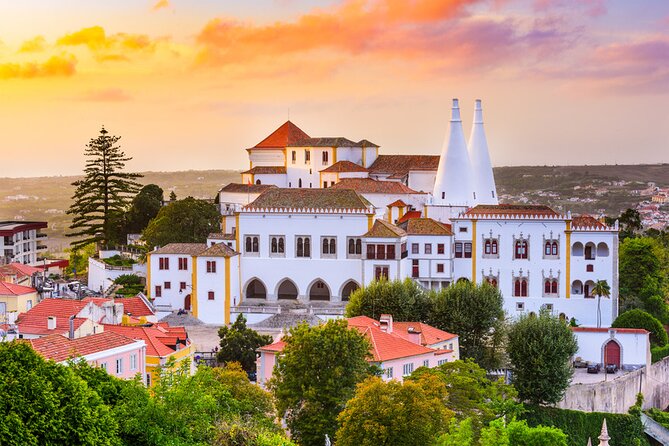
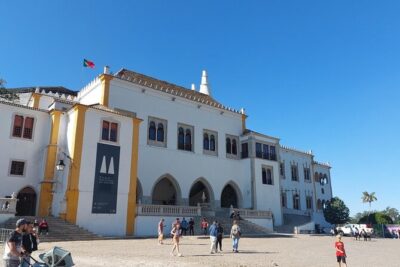
Next comes the Sintra National Palace zone in the center of the village. It’s described as Portugal’s oldest palace and tied to a thousand years of story. Admission is not included, so plan for a quick look and orientation rather than an inside visit. If you’re the type who likes to connect exteriors to interiors, this is the moment to decide if you want to come back later on your own.
Palácio e Parque Biester and Vale dos Lagos: Romantic architecture plus calm nature
A major reason I like this route is the mix. You go from town legends to architecture to lakeside quiet without changing your pace.
Palácio e Parque Biester is a standout because it’s rooted in real design history, not just a pretty façade. The building is connected to architect José Luiz Monteiro, and the surrounding botanical park is credited to François Nogré. Even in a short stop, you can usually spot the “Romantic” intentions in the way the palace and park relationship is set up—like the building and garden are meant to be read together.
Then you shift to Vale dos Lagos, where the focus is on scenery: tranquil lakes and lush surroundings. The stop is short, but the value is that you’re learning Sintra’s rhythm. This region often gets framed as castles and towers, but the softer, greener moments are what make the whole place feel like more than a tourist checklist.
Castelo dos Mouros: the “big view” stop where the day clicks
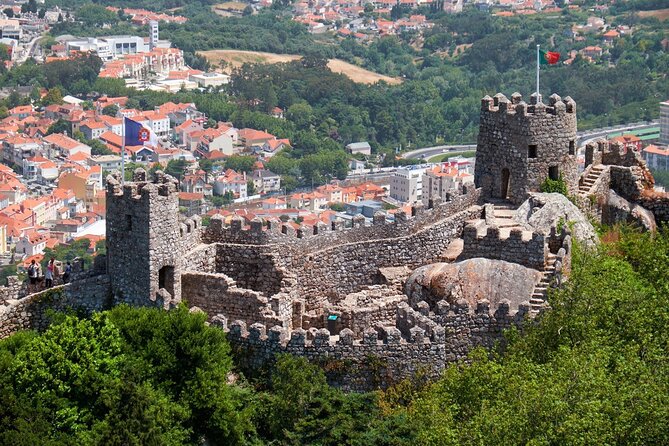
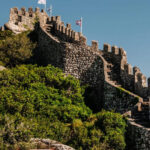
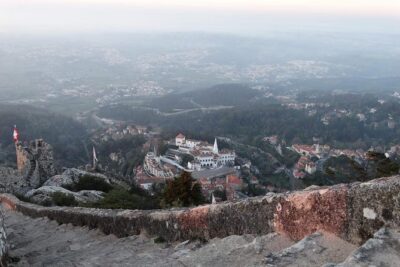
If you want one stop that can feel like the reward for the morning, it’s Castelo dos Mouros. The castle sits on a rocky massif, high above Sintra’s mountains, and the whole point is the outlook.
From the walls, you get a privileged sweep over the rural surroundings and, on clear days, the Atlantic horizon in the distance. It’s the kind of view that instantly helps you understand why these fortifications were placed here: elevation for defense, and elevation for control of the land.
Because the stop is brief, I’d treat it like this: get your bearings fast, find one angle for photos, and then take a moment to scan the terrain. When your eyes adjust, you’ll start seeing the pattern of valleys, settlements, and ridgelines that you usually miss when you only look at postcards.
Pena Palace area and the Moorish-Gothic-Romantic blend
After the castle, the route moves to the Park and National Palace of Pena area. Pena is one of those places people talk about in half sentences—because it’s hard to describe how much style is packed into one complex.
The design is described as a fusion of romantic, Gothic, and Moorish elements. Even with limited time, that fusion matters because it tells you Sintra’s palaces weren’t built as one-style statements. They’re a collage of influences, designed to feel theatrical and surprising.
Here’s how to make the most of a short stop: don’t try to absorb every detail. Instead, pick one view direction and watch how the shapes and colors read against the hills. If fog rolls in, you might lose some distance, but you often gain mood.
Wind up the hill by tuk-tuk with a few more palace runs.
- Private Tour Sintra, Palaces and Mountain Tuk Tuk(2 to 6 people)★ 5.0 · 174 reviews
- Private Tuk Tuk Tour around Sintra★ 5.0 · 118 reviews
- Sintra Tour With Tuktuk★ 4.9 · 102 reviews
- Private Tuk Tuk Tour around Sintra★ 5.0 · 86 reviews
- Sintra: Private Sightseeing Tuk Tuk Tour★ 4.8 · 68 reviews
Quinta da Regaleira and Monserrate: mystery, writers’ retreats, and English art influence
Two of the most atmospheric stops on the day are Quinta da Regaleira and Parque e Palacio de Monserrate.
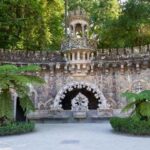
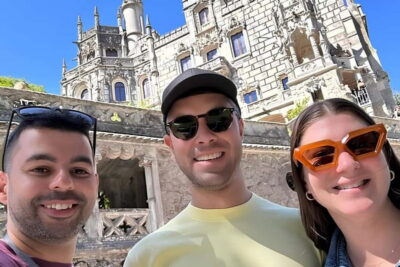
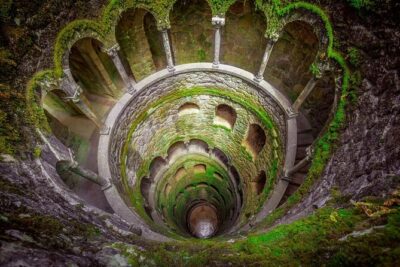
At Quinta da Regaleira, the site is described as mysterious, and the palace is commissioned in the early 20th century by millionaire António Augusto Carvalho Monteiro (1848–1920). Even if you’re only seeing the grounds from outside, the point of Regaleira is that it feels designed for story and symbolism. That makes it ideal for a quick guide-driven stop, because the guide can help you read what you’re looking at without needing a full formal tour.
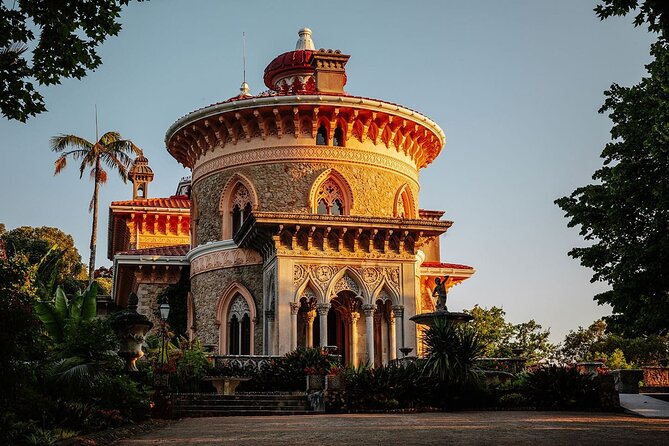
Then there’s Monserrate. This place has a reputation as a writers’ retreat, and it also attracted foreign visitors—especially English travelers—who wrote about its beauty in travel accounts and engravings. A key name here is Francis Cook, a wealthy English industrialist and art collector from the 19th century, whose visit helped inspire what became a Romantic masterpiece in the park and palace.
Why this matters for you: if you enjoy gardens and how people use them for imagination, Monserrate often feels more personal than the headline palaces. You can use this part of the tour to slow down mentally, even if the vehicle schedule keeps you moving.
Penedo: the traditional village break before the coast
Between the grand palaces and the ocean drama, you get a quieter reset at Penedo. It’s described as one of the most traditional villages in Sintra, and it also has a specific recognition angle: it was a pre-finalist in the 7 Wonders of Portugal in the villages category.
This stop is a nice counterweight. If you’ve been staring at towers and palace walls, Penedo gives you a chance to see how local life sits in the landscape. It can also help you break up the day so you’re not mentally exhausted by the time you reach the cape.
Admission here is listed as free, and that also helps the value feel more balanced. You’re not constantly deciding whether each stop is worth extra costs.
Cabo da Roca and Azenhas do Mar: the western edge of continental Europe
Now for the part most people remember.
Cabo da Roca is described as the westernmost point of continental Europe. The area sits at the edge of the Sintra Mountains, and it’s one of Portugal’s most emblematic locations. The lighthouse and tower date back to 1722, and the tower is 22 meters high. There’s also a technical detail: the light’s luminous range is around 26 nautical miles (about 48 kilometers).
Cabo da Roca is also tied to an atmosphere program for peace through Sri Chinmoy Peace Blossoms, since 1989. In plain terms, you’re not just visiting a point on a map. You’re joining a place that carries a symbolic meaning as well as big physical scale.
Weather is a big deal here. Cabo can be shrouded in mist or lit up in sunlight, and that changes the mood fast. If conditions are rough, the guide may swap the cape segment for another local option; I’ve seen notes about replacing it with a local winery when the weather made the cape part unpleasant.
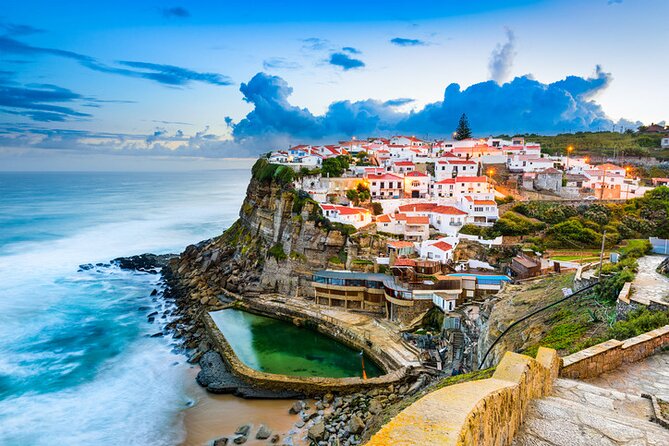
Right after that, you head to Azenhas do Mar, a cliffside scene where houses cascade down toward the sea. The area is famous for the ocean pool that visitors can enjoy, and the “pool” story is tied to the tides: during high tide, the sandy area can shrink or even disappear. It’s described as a former fishing village that turned into a peaceful summer spot, and it’s also credited as inspiration for artists like Júlio Pomar, Emílio da Paula Campos, and Milly Possoz.
This is where the tour’s pacing makes sense. You leave the highest viewpoints and then end on something visually simple but emotionally satisfying: sea, cliffs, and that postcard geometry.
Price and value: what you pay for (and what you don’t)
At $117.62 per person, this is not a bargain-basement option. But for Sintra, it can still feel fair if you factor in the route efficiency and the guided interpretation.
Here’s the value equation I’d use:
- You get a private group experience, so you’re not stuck watching others wander in slow motion.
- You get bottled water included, plus a mobile ticket system.
- You’re guided in English, which matters for history and “what am I looking at” moments.
- You’re covering a wide geography in a short span, which reduces the logistics hassle of doing it on your own.
What you don’t get: access tickets to monuments, palaces, and gardens. The tour is meant for seeing from outside. If your goal is to spend long periods inside the biggest sites, you’ll still need to plan extra time (and extra ticket costs) for that.
So the smart way to think about pricing is this: you’re paying for orientation, route planning, and viewpoint access, not for a full set of paid palace entrances.
Weather, fog, and how to keep your day on track
This experience is listed as requiring good weather. That’s not a small footnote. When you’re visiting cape edges and ocean-adjacent viewpoints, fog and rain can change the experience quickly.
If the tour is canceled due to poor weather, you should expect a choice of a different date or a full refund. And in practice, guides can also adjust the day. There are notes about substituting the Cabo segment with an indoor or sheltered local stop when the conditions made the cape less enjoyable.
My advice: come prepared to dress in layers and pack something waterproof. Even if you don’t need it, you’ll feel calmer. And with Cabo especially, mist is not always bad. It can soften the edges of the cape into something more atmospheric.
Who this tuk-tuk tour suits best (and who should plan differently)
This is a strong fit if:
- You want to see multiple major Sintra zones without driving yourself.
- You like having history explained in a practical way while you’re moving between stops.
- You have limited time and want the big highlights in a controlled 3 to 4 hour window.
- You prefer a relaxed pace over a long walking day.
It’s not the best fit if:
- You want to do deep, inside-only palace touring with long stays in each monument.
- You want lots of time for ticket lines, full guided museum-style entry, or slow wandering without schedule pressure.
Also worth noting: the tour is described as “most travelers can participate,” it’s near public transportation, and service animals are allowed.
Should you book this Tuk-Tuk Tour in Sintra Palaces to Cabo da Roca?
Yes, if your goal is a smart, efficient best-of day: Sintra’s palace vibe, a castle viewpoint with Atlantic scale, and then the drama of Cabo da Roca plus the postcard cliffs of Azenhas do Mar. The price makes more sense when you treat it as guided route value rather than an all-inclusive ticket bundle.
Book it especially if you want the day handled for you: English guiding, short stops at the key sites, and a route that keeps you from getting stuck choosing between palaces when time is tight. Just go in knowing that you’ll be mostly outside the big monument entrances, and plan any inside visits separately if that’s your priority.
FAQ
How long is the tuk-tuk tour?
The tour lasts about 3 to 4 hours.
What is included in the price?
Bottled water is included. Monument, palace, and garden access tickets are not included because the tour takes place outside of the attractions.
Is the tour in English?
Yes, it is offered in English.
Where does the tour start and end?
It starts at Largo Vasco da Gama 5, 2710-423 Sintra, Portugal, and ends back at the same meeting point.
What should I expect at Cabo da Roca?
You’ll visit Cabo da Roca, described as the westernmost point of continental Europe, including the lighthouse tower dating back to 1722. The experience can be misty or sunny depending on conditions.
What happens if weather is bad?
The experience requires good weather. If it’s canceled due to poor weather, you’ll be offered a different date or a full refund.
More Tuk-Tuk Runs Through Sintra



More of the Cabo da Roca Coast






More Tour Reviews in Sintra



Not quite this one? Other Sintra tours travellers rate

Cabo da Roca & the Atlantic Coast, compared.
 ★ 4.9Sintra, Pena Palace, Cabo da Roca, & Cascais TourFrom $563,509 reviews
 ★ 5.0Sintra, Cabo da Roca and Cascais: Full-Day Private Guided TourFrom $110218 reviews
 ★ 5.0E-Bike Self Guided Tour Sintra & Cabo da RocaFrom $58163 reviews
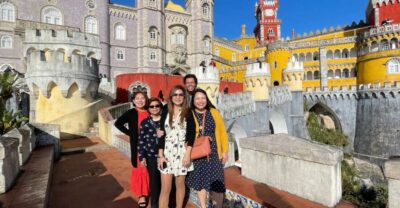 ★ 4.8From Lisbon: Sintra, Cabo da Roca, Cascais, & Estoril TourFrom $471119 reviews
 ★ 5.0Private Tour Sintra Palaces/Cabo da Roca (2 people or more)From $114115 reviews
 ★ 5.0Private tour in Sintra, Cabo da Roca, Cascais. Wonderful day.From $38796 reviews
 ★ 4.9Tour to Sintra, Cabo da Roca and CascaisFrom $7294 reviews
 ★ 5.0Magical Day Trip: Pena Palace, Sintra, CaboDa Roca & CascaisFrom $13991 reviews
Browse the lists this tour appears in